
How To Use A Spit Roaster Counterbalance Weight
Author: Rhiannon Peterson Date Posted:25 October 2024
Counter%20Balance%20Weight%20for%20Spit%20Rotisserie.jpg)
A counterbalance weight is one of the most useful accessories you can add to a spit roasting setup, yet it is often overlooked. Whether you are learning how to use a spit for the first time or regularly cooking whole animals and large cuts, proper balance can make the cook smoother, protect your motor and help the meat rotate more evenly.
At Flaming Coals, we know that even a powerful motor will perform better when the load is properly balanced. In this guide, we explain what a spit roaster counterbalance weight does, how to attach it and how to adjust it before starting your cook.
Quick Answer: What Does A Spit Roaster Counterbalance Weight Do?
A counterbalance weight helps correct an uneven load on a rotisserie skewer. It is positioned opposite the heaviest side of the meat, helping the skewer rotate smoothly instead of flopping as it turns. This reduces strain on the spit motor and supports more even cooking across the entire roast.
What Is A Counterbalance Weight?
A counterbalance weight is designed to balance the load on your spit roaster. It is especially useful when cooking whole animals or large cuts that carry more weight on one side than the other.
For example, the belly side of a whole animal will often be heavier. As the skewer rotates, that heavier section naturally wants to drop towards the ground. This can cause the meat to speed up as it falls, then force the motor to work harder as it lifts the heavy section back over the top.
The counterbalance weight offsets that uneven load. When positioned correctly, it helps the skewer turn with a smoother and more consistent motion.
Why Meat Becomes Unbalanced On A Spit
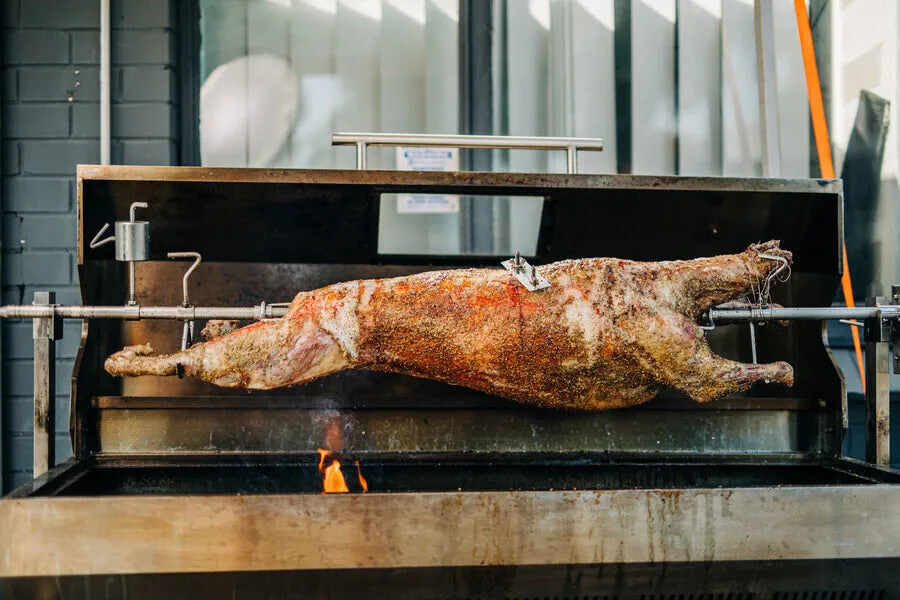
Even if the meat is positioned carefully on the skewer, it may not be perfectly balanced. Whole animals and irregularly shaped roasts rarely distribute their weight evenly.
An unbalanced load may:
- Flop as it rotates
- Place additional strain on the motor
- Rotate unevenly
- Expose some sections to the heat longer than others
- Make the cook harder to control
A counterbalance weight does not replace proper meat positioning or secure mounting. Instead, it gives you another way to fine tune the setup once the meat has been attached to the skewer.
How To Attach A Counterbalance Weight
A counterbalance weight has a round collar that slides over the rotisserie skewer. Once it is in the correct position, the collar is tightened to lock the accessory in place.
Attach the counterbalance weight to the end of the skewer opposite the motor. On most setups, this will be the pointed end of the skewer.
The weight should remain loose enough to adjust during the balancing process. Once you have found the correct position, tighten it securely before placing the skewer onto the spit roaster.
How To Adjust The Counterbalance
.webp)
The position of the weight determines how much counterbalancing effect it creates.
Moving the weight closer to the skewer reduces its effect. Moving the weight further away from the skewer increases the amount of counterbalance.
This adjustment is particularly important when cooking meat with a significant difference in weight between each side. You may need to move the weight several times before finding the correct position.
The goal is not to guess where the weight should sit. The best approach is to test the balance before turning on the motor.
How To Perform The Flop Test
The flop test is a simple way to identify the heavy side of the meat and adjust the counterbalance weight correctly.
1. Ask Someone To Help
Have another person hold one end of the skewer while you hold the opposite end. Keep the skewer supported but allow it to rotate freely in your hands.
2. Let The Meat Turn Naturally
Allow the meat to rotate without forcing it. The heaviest side will naturally fall towards the ground.
This is the side creating the imbalance.
3. Position The Counterbalance Opposite The Heavy Side
Rotate and position the counterbalance weight so it sits directly opposite the heavy side of the meat.
The weight should counteract the section that wants to fall downward.
4. Adjust The Distance
Move the weight closer to or further away from the skewer. Moving it out increases the effect, while bringing it in reduces the effect.
5. Repeat The Test
Let the skewer rotate freely again. If the same side still drops quickly, make another adjustment.
Continue repeating the flop test until the skewer turns smoothly without one side falling heavily towards the ground.
Why Proper Balance Protects Your Motor
An unbalanced spit roast makes the motor work harder during every rotation. The motor must lift the heavy side of the meat, then control it as the weight drops again.
Over a long cook, this repeated strain can increase the risk of overheating, burnout or mechanical failure.
Using a counterbalance weight helps reduce that workload. The motor can maintain a smoother rotation instead of constantly fighting against an uneven load.
This is particularly important when cooking large animals or heavy roasts for several hours. Balancing the load before the cook begins can help protect the motor when you need it most.
How A Counterbalance Supports Even Cooking
Smooth rotation is also important for the food itself.
When the meat flops or struggles during rotation, certain sections may move past the fire too quickly while others remain closer to the heat for longer. This can contribute to uneven cooking across the roast.
A properly balanced skewer rotates at a more consistent pace. This gives each side of the meat more even exposure to the heat, supporting better colour and more consistent cooking from one side to the other.
When Should You Use A Counterbalance Weight?
.webp)
A counterbalance weight is most useful when cooking:
- Whole lambs
- Whole pigs
- Large or unevenly shaped roasts
- Meat with a noticeably heavier side
- Any load that flops as the skewer turns
Smaller and evenly balanced cooks may not require one. The easiest way to tell is to perform the flop test before placing the skewer over the fire.
If one side falls heavily every time, a counterbalance weight can make a significant difference.
A Small Accessory That Can Save Your Cook
A counterbalance weight may be simple, but it plays an important role in a large spit roast. It improves rotation, reduces unnecessary motor strain and helps the meat move more evenly over the heat.
Taking a few extra minutes to attach the weight and perform the flop test can prevent problems later in the cook. When you are preparing a whole animal or a large roast for an important gathering, that extra preparation is well worth it.
Improve Your Flaming Coals Spit Setup
The right accessories can make spit roasting easier, more reliable and more enjoyable.
Explore our Flaming Coals spit roasting videos for practical cooking and setup advice, view our Large Spit Roaster for bigger cooks, or browse our full range of spit rotisserie accessories to complete your setup.
Remember, a strong motor matters, but even the best motor benefits from a properly balanced load.
Frequently Asked Questions
Where Does A Counterbalance Weight Attach?
It slides over the skewer and is normally positioned on the opposite end from the motor, usually near the pointed end.
Which Side Should The Weight Be On?
The weight should sit opposite the heaviest side of the meat. Use the flop test to identify which side naturally falls downward.
How Do I Increase The Counterbalance Effect?
Move the weight further away from the skewer. Moving it closer reduces the counterbalancing effect.
Does A Counterbalance Weight Reduce Motor Strain?
Yes. Correctly balancing an uneven load helps the motor rotate the skewer more smoothly and reduces the effort required to lift the heaviest side.


